
I am not going to sugarcoat anything. This political climate freaking sucks right now. While the divide that is portrayed in the media seems great and deep, from my work as a nurse practitioner, it’s not as separated as they make it seem. 99% of the people are worried about the future of America. This can be hard to remember, however, when we are being bombarded with all the political upheaval and division- fed to us over and over again on social media and bias news outlets.
With all this stressful and downright scary info being thrown at us constantly, it’s not surprising that more people are reporting increased anxiety, stress, sleep difficulties, and a sense of hopelessness. I understand how overwhelming these times can be and how crucial it is to prioritize mental health.
I think it is important to acknowledge that I understand it is a privilege to be able to step back from some of this. Many people do not have that option, as their lives are directly affected by the horrific events unfolding globally. I deeply respect and empathize with those that are in the thick of these struggles day to day. Taking a break from social media, for example, doesn’t mean turning a blind eye to the suffering in the world. It means acknowledging our limits and taking the necessary steps to ensure we can continue to support and advocate for others without burning out. Protecting our peace allows us to stay resilient and remain engaged in meaningful ways over the long term.

Here are 8 ways to care for yourself:
1. Limit News and Social Media Consumption
While staying informed is important, constant exposure to distressing news can be harmful. Set specific times to check the news and avoid excessive consumption. Consider using reliable sources and avoiding sensationalist media. Remember, it’s okay to take breaks from the news entirely.
Consider not exposing yourself to negative media consumption in the evenings and before bed when the mind and body are starting to prepare for rest. Reading or seeing intense content can trigger your nervous system making it harder to fall asleep, stay asleep, increase nightmares, and contribute to poor quality sleep.
2. Practice Mindfulness and Meditation
Mindfulness and meditation can be helpful tools for managing stress and anxiety. These practices can help ground you in the present moment and reduce the impact of external stressors. You don’t have to go balls to the wall with 1 hour of meditation– start with just a few minutes a day and gradually increase your practice if it feels good. Apps like Headspace and Calm can be helpful for beginners.
3. Engage in Enjoyable Physical Activity
Positive body movement is a proven way to reduce stress and improve mood. Whether it’s a walk in the park, a yoga session, or strength training, find an activity you enjoy and try to make it a regular part of your routine. If you are starting to incorporate movement from a pretty sedentary lifestyle- start small! Just adding 20 minutes of movement 3 times per week can help.
4. Connect with Others
Social support is crucial during stressful times. Reach out to supportive friends or family groups if you want to share your feelings and experiences about what is going on. Engaging in meaningful conversations can provide comfort and a sense of community and solidarity. Consider finding local groups in your community or start one of your own! Some that I am a part of are a book club and a mom’s group. I’d love to start one that plays board games at least once per month.

5. Set Boundaries
Sometimes easier said than done, it is important to recognize when political discussions are affecting your mental health. It’s okay to set boundaries with friends and family about these topics. Let them know if you’d prefer to avoid certain discussions and try to hold firm to those boundaries that you have set.
6. Focus on What You Can Control
During times of political uncertainty, it can feel like so much is out of your control. Focus on areas where you can make a positive impact. This might include volunteering, engaging in local community activities, or advocating for causes you care about. Taking proactive steps can give you a sense of purpose and agency.
7. Practice Self-Compassion
Be kind to yourself during these times. It’s natural to feel overwhelmed or anxious in the face of political turmoil. Acknowledge your feelings without judgment and remind yourself that it’s okay to feel this way and that your feelings are valid. Practicing self-compassion can also look like engaging in relaxing activities that you enjoy such as reading, gardening, cooking, or journaling. Give yourself permission to relax and be kind to yourself.
8. Seek Out a Professional For Help
If political stress is really impacting your daily life and mental health, consider seeking professional help. A mental health professional can provide strategies and support tailored to you. They can be a great sounding board and help you when things are feeling really heavy. Therapy or counseling can be incredibly beneficial in making it through these challenging times.

Navigating mental health, especially through this current political circus, can be hard, but it’s so important to prioritize your well-being. Remember, taking care of your mental health is a continuous process, and seeking support when needed is a sign of strength. I hope we can all find ways to support each other while we go through this together.
Stay mindful, stay connected, and take care of yourself.
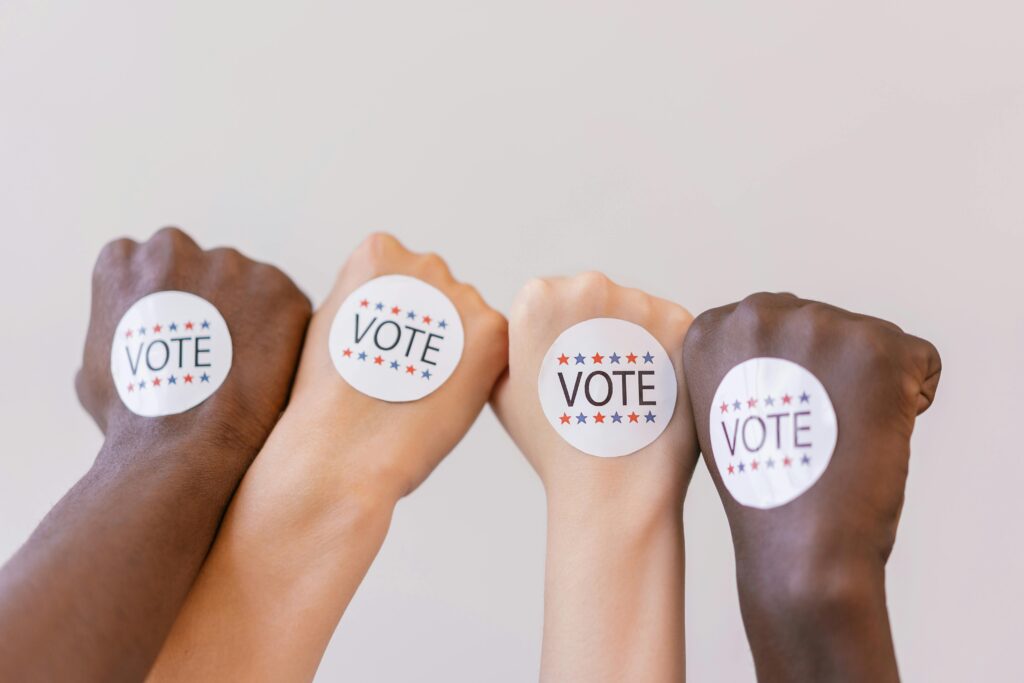
P.S. Don’t forget to vote!
Legal Disclaimer: The information provided on MentalHealthDestinations.com is for general informational purposes only and is not intended as medical advice. The content on this website should not be used to diagnose, treat, or prevent any medical or psychological condition. Always seek the advice of your physician or other qualified mental health provider with any questions you may have regarding a medical or psychological condition. Never disregard professional medical advice or delay in seeking it because of something you have read on this blog. While the author of MentalHealthDestinations.com is a licensed medical professional, the content on this website is not a substitute for professional medical advice, diagnosis, or treatment and your own medical/psychiatric/therapeutic professional should be consulted. The use of any information provided on this site is solely at your own risk. If you are in crisis or think you may have a medical emergency, call your doctor, go to the nearest emergency room, or call 911 immediately. For immediate help with a mental health crisis, consider contacting the National Suicide Prevention Lifeline at 1-800-273-TALK (1-800-273-8255) or text “HELLO” to 741741 to connect with a trained crisis counselor.

